
PSHE Personal Finance: Helping Students Understand Risk and Odds
We’re facing a critical gap in our PSHE lessons: preparing students for a world where financial risk and gambling odds are omnipresent. From the allure of crypto-investments on social media to the saturation of sports betting advertisements, young people are navigating a landscape filled with probabilistic thinking and financial pitfalls. As educators within the UK teaching profession, we have a duty to move beyond simple budgeting lessons. We must arm students with the critical numeracy skills to dissect risk, understand odds, and recognise the subtle difference between informed investment and exploitative chance. This is where robust financial literacy in UK schools meets the concrete maths of probability, creating a vital shield for young adults.
Why Risk Literacy Belongs in PSHE Finance Education
The modern PSHE curriculum aims to prepare students for life’s real-world challenges. Yet, when it comes to financial education, the crucial element of risk is often glossed over or reduced to simplistic warnings. True financial capability isn’t just about knowing how to save; it’s about understanding the likelihood of different outcomes, from the return on a student loan to the true cost of a ‘free’ bet offer. By embedding risk literacy, we directly connect PSHE’s mission with the analytical rigour of the maths curriculum, creating a powerful, interdisciplinary learning experience.
The Statutory Mandate for Financial Literacy
Educators have a firm foundation upon which to build. The statutory Relationships and Sex Education (RSE) framework mandates financial education in England for all state-funded schools. It explicitly requires that pupils are taught about the functions and uses of money, the importance of personal budgeting, and managing financial risk. This mandate provides a clear imperative to move beyond theory and into the practical, often probabilistic, realities of financial decision-making. It’s not an optional add-on; it’s a required component of a holistic education.
Bridging the Gap Between PSHE and Maths
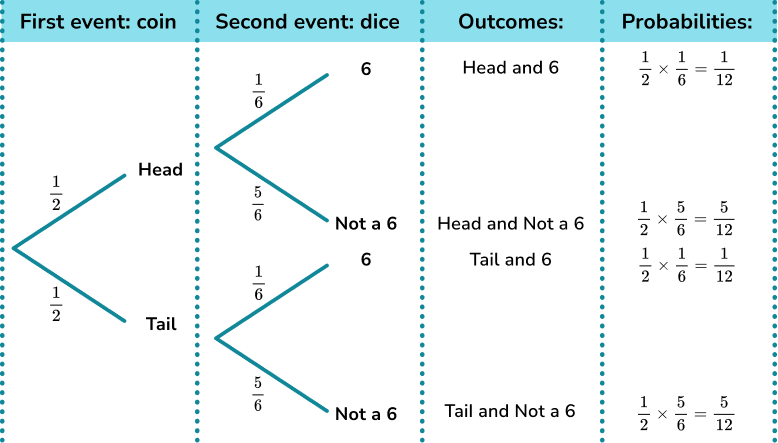
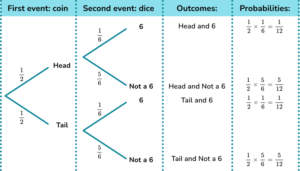
Too often, students compartmentalise their learning. Probability theory is something done in GCSE maths with spinners and dice, while financial choices are discussed in PSHE without the hard numbers. This is a missed opportunity. The PSHE classroom is the perfect arena to apply GCSE probability math to tangible, impactful scenarios. By bridging this gap, we give mathematical concepts a purpose and provide financial lessons with an evidence-based backbone. We show students that the maths they learn has direct bearing on their wallet and their wellbeing.
Core Concepts: Probability, Odds, and Expected Value
To navigate a world of risk, students need a clear toolkit of concepts. This begins with a firm grasp of the language of chance, and crucially, how that language can be manipulated.
From GCSE Fractions to Bookmaker Odds
In the maths classroom, probability is expressed as a fraction, decimal, or percentage between 0 and 1. A fair coin flip is a 0.5 or 50% chance of heads. However, in the world of gambling, the term ‘odds’ is used, and it’s presented differently. A bookmaker like Ladbrokes might offer odds of “2/1” (two-to-one) on a football team winning. Students need to learn to translate this: odds of 2/1 imply the bookmaker believes the probability is 1/(2+1) = 1/3 or roughly 33%. This translation is the first step in demystifying betting advertisements and understanding that odds are not neutral statements of chance, but prices set by a business.
The ‘Expected Value’ Reality Check
The most powerful tool for assessing any risky proposition is expected value (EV). In simple terms, it’s the average outcome you would expect if you could repeat a bet or investment thousands of times. It’s calculated by multiplying each possible outcome by its probability and summing the results. For example:
- A fair coin flip: You pay £1 to play. Heads you win £2, tails you win £0. EV = (0.5 x £2) + (0.5 x £0) = £1. A fair game.
- A lottery ticket: You pay £2. The chance of winning £1 million is 1 in 2 million. EV = (1/2,000,000 x £1,000,000) + (1,999,999/2,000,000 x £0) = £0.50. You lose £1.50 on average per ticket.
This “reality check” mathematically demonstrates why most gambling is a losing proposition in the long run. The EV is nearly always less than the cost to play—this is the ‘house edge’.
Gambling Maths in the British Curriculum Context
We don’t need to invent new maths to teach these lessons; we can reframe existing GCSE probability problems within critical, real-world contexts. This approach aligns with a responsible gambling math curriculum that focuses on analysis and harm prevention, not promotion.
Analysing the National Lottery’s Odds
A classic classroom exercise can involve calculating the probability of winning the National Lottery’s Lotto jackpot. Students can work out that you need to match 6 numbers from 59. The number of possible combinations is a standard combinatorial problem: 59!/(6!*(59-6)!). This reveals that the National Lottery’s Lotto game has odds of approximately 1 in 45 million for winning the jackpot. Contextualise this: you are far more likely to become the next Prime Minister or be struck by lightning multiple times. Comparing the £2 ticket price to the EV of the jackpot (even when it’s £10 million) reveals a stark mathematical truth about the game’s design.
Spotting the Edge in Sports Betting Markets
Take a simple example of a two-horse race. If Horse A has odds of 2/1 (implied probability 33%) and Horse B has odds of 1/2 (implied probability 66%), the total implied probability is 99%. But wait—in a real race, the total probability must equal 100%. The missing 1% is the bookmaker’s overround, or ‘edge’. This built-in margin guarantees the bookmaker a profit regardless of the outcome. Students can analyse real (but anonymised) betting markets from football or tennis to calculate this overround, understanding that betting companies are not charities offering games, but businesses pricing risk to ensure profitability.
Practical Classroom Activities for PSHE Lessons
Concrete activities make these abstract concepts stick. The key is using real-world materials with a critical, analytical lens.
The ‘Safe Bet’ vs. ‘Long Shot’ Simulation
Using tools like the MoneySavingExpert.com ‘Gambling Calculator’ can be an eye-opening exercise. This free tool demonstrates long-term losses based on different betting behaviours. In class, students can run simulations: what happens if you “invest” £10 a week on a favourite with low odds versus a long shot with high odds over a year? They will quickly see the relentless downward trajectory of their virtual balance, visualising the concept of expected value and the house edge over time. This is a powerful, non-promotional way to demonstrate consequence.
Deconstructing Financial Advertising
Bring in advertisements for financial products and gambling. Compare an ISA advertisement highlighting a 3% return with a premium bonds promo focusing on “life-changing wins.” Analyse the language, imagery, and how probability is presented (or hidden). For gambling ads, have students:
- Identify the advertised “offer” (e.g., “Bet £10, Get £30 in free bets”).
- Decode the odds presented for a sample event.
- Calculate the expected value for a customer using the offer.
- Discuss the business model: how is the company making money?
This builds critical media literacy alongside financial and numeracy skills.
Addressing Concerns and Ethical Delivery
Teaching about gambling within PSHE finance education requires sensitivity and a clear ethical framework. The goal is harm reduction through education, not curiosity generation.
Partnering with PSHE Associations for Guidance
Framing is everything. This work should be positioned squarely within the statutory requirements for financial education and personal wellbeing. Using the official guidance from the PSHE Association is crucial. Furthermore, leveraging resources from expert organisations provides credibility and safety. The charity GamCare offers educational resources for schools on gambling risks, providing lesson plans and materials that are age-appropriate and focused on awareness. Similarly, Young Money (part of Young Enterprise) provides financial education certification for schools and offers robust frameworks for teaching about risk and probability in a financial context.
Focus on Informed Choice, Not Promotion
Every lesson must consistently emphasise that the purpose is analytical understanding to empower informed life choices. The maths reveals that gambling is a statistically losing activity. The discussion should extend to other financial risks: payday loans, speculative investments, and even career choices. Transparency with parents and governors is key—share lesson plans and objectives proactively, highlighting the protective, preventative nature of the curriculum. We are not teaching students *how* to gamble; we are teaching them *how* gambling works, so they can make informed decisions.
We must equip students with the analytical tools to navigate a risky financial landscape, making risk literacy a cornerstone of modern PSHE. By fusing the real-world focus of PSHE with the rigorous probability of the maths curriculum, we do more than teach fractions—we build resilience, critical thinking, and genuine financial capability for the challenges of adult life in the UK.


Post Comment
You must be logged in to post a comment.