Teaching GCSE Probability and Statistics with Casino Math Examples
Picture this: your GCSE maths class eagerly calculating the odds of a roulette wheel spin. While the topic of gambling requires careful, ethical handling, the mathematical principles underpinning casino games offer a uniquely engaging framework for teaching core probability and statistics. For educators within the UK teaching profession, using these real-world contexts can demystify abstract concepts, directly supporting the National Curriculum for England’s aim of applying maths to real-life scenarios. This approach not only prepares students for exam questions from boards like AQA and Edexcel but also lays a vital foundation for financial literacy in UK schools, fostering critical thinking about risk, odds, and long-term decision-making.
Why Use Casino Math to Teach Probability?
Integrating casino math into lessons is not about promoting gambling, but about leveraging its well-defined, probabilistic structures. The mechanics of games like roulette or blackjack provide clear, bounded models for calculating likelihood, which aligns perfectly with the applied mathematics focus found in the National Curriculum for England. Furthermore, it opens a natural dialogue about the regulated nature of the gambling industry in Britain, referencing bodies like the UK Gambling Commission, and connects mathematical theory to tangible financial outcomes.
The Engagement Factor
Let’s face it, probability problems about drawing coloured counters from a bag can sometimes fail to ignite classroom passion. Casino games, with their inherent narrative and cultural recognition, present the same mathematical laws in a more compelling package. Calculating the chance of rolling a ‘7’ in craps or being dealt a blackjack immediately frames maths as a tool for analysing intriguing scenarios, boosting student engagement and retention of complex ideas.
Linking to Real-World Financial Literacy
Financial literacy in UK schools is about more than budgeting; it’s about understanding risk and reward. The mathematics of gambling provides a stark, numerical illustration of how certain financial decisions carry inherent, quantifiable risks. Teaching through this lens allows students to dissect the concept of ‘the house always wins’ mathematically, building a foundational scepticism towards ‘get-rich-quick’ schemes and a deeper appreciation for long-term, informed financial planning.
Core Probability Concepts Through Casino Games
From simple to compound events, casino games serve as excellent, ready-made examples for the GCSE probability syllabus. By mapping games to specific exam board requirements, such as those in the AQA GCSE Mathematics specification, teachers can create powerful, memorable lessons.
Roulette and Simple Probability
A European roulette wheel, with its 37 pockets (0-36), is a perfect model for teaching simple probability. Students can easily calculate P(Red) or P(Even) as fractions, decimals, and percentages. This directly addresses GCSE requirements to calculate theoretical probability for single events. Discussing the addition of a ’00’ in American roulette also offers a simple lesson in how rule changes directly affect odds—a key financial literacy insight.
Dice Games and Compound Events
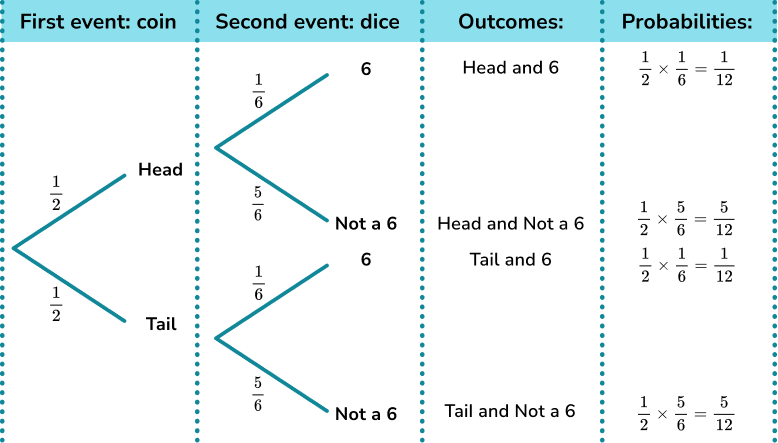
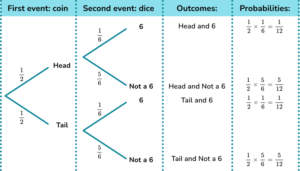
Games like craps, or simply betting on the outcome of rolling two dice, are ideal for teaching compound events. Students can calculate the probability of rolling a sum of 7 versus a sum of 11, exploring sample space diagrams and the product rule for independent events. This hands-on application moves beyond textbook exercises, solidifying understanding of how multiple probabilities interact.
Card Games and Conditional Probability
Blackjack is a rich source for conditional probability. The question, “What is the probability of drawing an Ace, given that two Kings have already been dealt?” mirrors classic GCSE problems but within a dynamic context. Card games make the concept of ‘given that’ tangible, as the composition of the deck—and therefore the probabilities—changes with each card dealt, providing a clear pathway into this more challenging topic.
Statistics and Expected Value in Gambling
Moving beyond probability, casino math is a powerful vehicle for teaching statistical concepts like expected value and data analysis, which are crucial for GCSE Statistics and higher-tier maths papers.
Calculating Expected Value
Expected value (EV) is the cornerstone of understanding any bet. Students can calculate the EV of a simple £1 bet on a single number in roulette: (35 * 1/37) + (-1 * 36/37) = -£0.027. This small negative number isn’t just an abstract result; it quantifies the average loss per bet over time, translating probability into a predicted financial outcome.
Understanding the House Edge
The collective term for the casino’s built-in advantage across all games is the ‘house edge’. It is essentially the negative expected value expressed as a percentage. For example:
- European Roulette (single zero): House edge ≈ 2.7%
- Blackjack (with basic strategy): House edge ≈ 0.5%
- Slot Machines: House edge can vary widely, often 5-15%
Analysing these figures teaches students that not all risks are equal and that understanding the rules and odds is paramount in any financial decision.
Analysing Simulated Data
Students can use technology to simulate thousands of spins, rolls, or hands. They can then compare the experimental probability (e.g., actual wins from the simulation) with the theoretical probability calculated earlier. This activity brings statistics to life, demonstrating the law of large numbers and the importance of sample size, while building crucial data analysis skills.
Ethical Teaching and Responsible Gambling
Teaching with casino math carries an undeniable ethical responsibility. This context must be firmly anchored within the safeguarding and educational frameworks of PSHE finance education, turning every maths lesson into an opportunity for responsible gambling awareness.
PSHE and Financial Education Links
The PSHE Association’s guidance on financial education and risk explicitly includes gambling. Lessons on probability provide a natural cross-curricular link to PSHE, where the mathematical ‘how’ meets the social and personal ‘why not’. Discussions can explore the psychological factors, the impact of advertising, and the real-world consequences of problem gambling, framing maths as a protective, analytical tool.
Promoting Responsible Gambling Awareness
It is imperative to signpost support and present a balanced view. Educators should integrate resources from responsible gambling charities like GamCare, the leading national provider of information, advice, and support for anyone affected by gambling harms. Highlighting the work of the UK Gambling Commission in regulating the industry also provides a balanced perspective, showing how mathematical risk is managed and monitored in society.
Practical Classroom Activities and Resources
Implementing this approach requires structured, thoughtful activities that maintain educational integrity while maximising engagement.
Simulation Exercises with Technology
Using spreadsheet software like Excel or Google Sheets, students can build simple random number generators to simulate dice rolls or roulette spins. They can then:
- Run 100, then 1000, then 10,000 trials.
- Graph the relative frequency of an event (like rolling a 7) against the trial number.
- Observe how the experimental probability converges towards the theoretical value.
- Calculate the running total of ‘profit/loss’ based on a betting strategy to visualise expected value over time.
Discussion and Assessment Ideas
Follow simulations with critical discussion and assessment. Prompts could include: “Using your calculated house edge, explain why a casino is a profitable business model,” or “Analyse a betting advertisement and use probability to critique its claims.” For formal assessment, exam-style questions can be contextualised: “A casino game involves drawing two cards from a standard deck. Calculate the probability that both are picture cards. The game pays 5:1 for this outcome. Calculate the expected value of a £2 bet and comment on its fairness.”
Teaching probability through casino math not only meets the rigorous standards of the GCSE curriculum but also equips students with a profound understanding of risk and statistical reasoning. By ethically framing these engaging examples within the context of financial literacy and responsible gambling awareness, educators can foster critical thinkers who are better prepared to navigate the probabilistic nature of everyday financial decisions.



Post Comment
You must be logged in to post a comment.