Teaching UK Students About Responsible Gambling and Financial Decision Making
In a nation where gambling adverts punctuate every football match and dominate high streets, the classroom must become the frontline for building financial resilience. For educators in the UK, this means moving beyond traditional savings lessons to directly address the maths behind the odds and the stark reality of risk. By integrating this critical discussion into both PSHE and the mathematics curriculum, we can equip a generation not just to calculate probability, but to understand its profound impact on their financial wellbeing and personal lives.
Why Gambling Maths Belongs in the UK Curriculum
Omitting gambling from financial and maths education is a profound disservice to students growing up in a gambling-saturated environment. With betting shops on every other high street and online ads targeted at sports fans, ignorance is not protection—it’s vulnerability. Proactive education, rooted in the cold, hard numbers of probability, is the only responsible approach to safeguarding young people’s futures.
The Reality of a Gambling-Saturated Culture
The statistics are alarming. According to the Gambling Commission, around 450,000 children gamble weekly. This isn’t happening in a vacuum; it’s the result of relentless normalisation through sports sponsorship, ‘free bet’ promotions, and the embedding of betting in video games and social media. When the National Lottery minimum age was raised from 16 to 18 in 2021, it was a clear acknowledgment of the risks, yet the cultural messaging often contradicts this caution. Education must cut through this noise with facts.
Linking Financial Literacy to Real-World Risk
True financial literacy isn’t just about opening a bank account; it’s about understanding and managing risk. Gambling presents a direct, mathematically quantifiable risk to personal finances. Teaching students to calculate the ‘house edge’ or the true cost of a ‘free’ bet promotion transforms gambling from a game of chance into a lesson in inevitable loss over time. This critical thinking is directly transferable to evaluating payday loans, car finance deals, or cryptocurrency investments, building a foundation for lifelong financial decision-making.
Integrating the Topic into PSHE and Maths Lessons
The cross-curricular nature of this topic is its greatest strength. PSHE provides the framework for discussing impact, behaviour, and societal harm, while GCSE Maths supplies the immutable laws of probability. This dual approach ensures students understand both the ‘how’ and the ‘why’—the mechanics and the consequences.
PSHE: The Behavioural and Social Framework
As per the PSHE Association guidance, which explicitly includes gambling within its financial education framework, lessons should focus on the behavioural hooks and social impact. Topics should include:
- The psychology behind gambling design: lights, sounds, and ‘near misses’.
- Recognising the signs of problem gambling in oneself or others.
- The impact of gambling debt on mental health, relationships, and life chances.
- Debunking myths, such as the ‘gambler’s fallacy’ (the belief that past losses increase the chance of a future win).
This creates a safe space for discussion, separate from the numerical calculations.
GCSE Maths: Calculating the House Edge
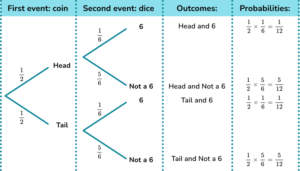
This is where theory meets practice. The maths curriculum already covers probability, making it the perfect vehicle for applied learning. Students can move beyond abstract dice rolls to calculate real-world scenarios:
- The probability of winning the National Lottery jackpot (1 in 45,057,474).
- The expected value of a bet, demonstrating how bookmakers’ odds guarantee their profit.
- Modelling how a seemingly small statistical advantage for the ‘house’ leads to certain loss over repeated bets.
This demystifies the industry and arms students with irrefutable numerical evidence.
Practical Classroom Activities for Understanding Odds
Concrete, engaging activities make the lessons stick. These exercises should be designed not to simulate gambling, but to simulate the mathematical and cognitive processes behind it, fostering critical analysis.
From Lottery Tickets to Football Accumulators
Start with familiar territory. Have students analyse a National Lottery ticket or a football accumulator bet slip promoted by a major brand. Task them with:
- Identifying all the costs, including hidden ones in ‘free’ bets (like wagering requirements).
- Calculating the true probability of success for each leg of the bet and the overall chance.
- Researching and comparing the payout for a winning bet against the total amount the company takes in from all customers for that bet, introducing the concept of profit margin.
This turns a ubiquitous advertisement into a rich data source for critical analysis.
Simulating Risk: The ‘FOBT’ Maths Exercise
Fixed Odds Betting Terminals (FOBTs)—the ‘crack cocaine of gambling’—had their maximum stake cut to £2 in 2019 following a huge public health campaign. Use this as a case study. In a maths lesson, create a simple spreadsheet simulation of a high-speed, repetitive game with a known, small disadvantage for the player (e.g., a 49.5% chance of winning each £2 ‘spin’). Let students run 100, 500, and 1000 simulated spins and chart their virtual balance. The exercise powerfully visualises how rapid, small-stake losses compound, driving home the rationale behind the £2 stake law and the danger of chasing losses.
Framing the Conversation on Financial Decision-Making
The end goal is not a simplistic ‘just say no’ message, but to build robust, broader financial decision-making skills. Gambling education should be a gateway to discussing personal finance holistically, positioning budgeting and critical thinking as primary defences.
Budgeting as the First Line of Defence
A student who understands how to allocate income for needs, wants, and savings has already built a barrier against viewing discretionary income as ‘gambling money’. Use gambling as a stark example of what a ‘want’ category entails—an almost-certain loss of funds that could be used for other purposes. This frames gambling expenditure as a conscious (and poor) budgeting choice, rather than a potential income stream.
Deconstructing Advertising and ‘Free Bet’ Promotions
Marketing literacy is a key 21st-century skill. Analyse gambling adverts as a class. Break down the imagery (celebrity endorsements, excitement), the language (‘risk-free’, ‘boosted odds’), and the small print. Have students calculate the actual value of a ‘£20 free bet’ that requires a £50 stake and must be rolled over five times before withdrawal. This practice empowers them to deconstruct all forms of financial marketing, from credit card offers to ‘buy now, pay later’ schemes.
Resources and Support for UK Educators
Thankfully, UK teachers are not alone in this endeavour. Several trusted organisations provide high-quality, curriculum-aligned resources:
- Young Money (part of Young Enterprise): Offers a wide range of financial education lesson plans and activities, with content that can be adapted to address gambling risks within a broader money management context.
- The Money and Pensions Service (MaPS): Provides the statutory financial education guidance for schools and hosts a resource hub with materials that support teaching about risk and making informed financial choices.
- PSHE Association: Their detailed guidance and lesson plans include specific learning opportunities about gambling harms within the financial wellbeing strand.
- BetRegret: The Gambling Commission’s flagship safer gambling campaign offers short, sharp video ads and educational materials focused on the emotional and financial regrets that follow impulsive bets, useful for PSHE discussions.
Equipping students with the mathematical tools to dissect gambling odds and the psychological insight to resist its allure is a crucial act of professional care. In weaving these lessons through GCSE probability math and PSHE finance education, we do more than teach a curriculum; we prepare young people for the complex financial realities of adult life in Britain. By fostering this blend of numerical literacy and critical resilience, the UK teaching profession can build a vital line of defence, ensuring students are informed consumers and protected individuals, capable of navigating a world where risk is often disguised as reward.



Post Comment
You must be logged in to post a comment.